NASA Takes Ownership of X-59 to Test Supersonic Flights
On November 18, NASA formally took ownership of the X-59 — a research aircraft designed to fly above the speed of sound while reducing the loud sonic boom to a softer "sonic thump" — and will continue the necessary flight testing to gather data that could inform decisions about commercial supersonic flights over land.
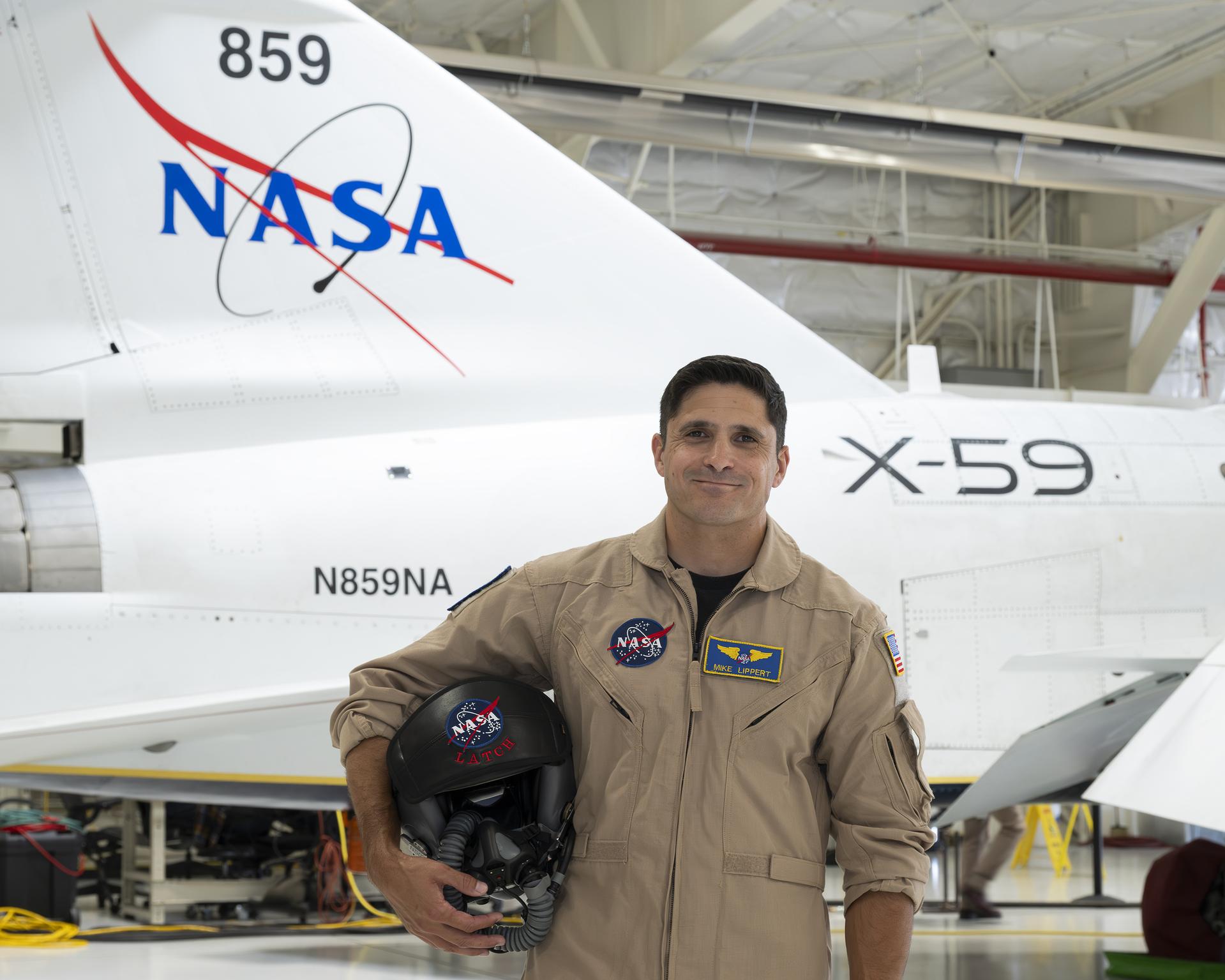
Image: NASA — NASA Adds X-59 Test Pilot. Editorial use; not endorsed by the agency.
Is it possible for a supersonic airplane to fly over populated areas without the sonic boom that today prevents such operations? On November 18, NASA formally took ownership of the X-59 — a research aircraft designed to fly above the speed of sound while reducing the loud boom into a softer sound called a "sonic thump" — and will continue conducting the tests needed to gather data that could inform decisions about commercial supersonic flights over land.
\n
Why formal ownership of the X-59 is a milestone
In practice, the transfer of ownership of the X-59 from Lockheed Martin Skunk Works to NASA, completed on November 18, represents an administrative and operational advance in the program. The agency had selected Lockheed Martin to collaborate on the project and lead the design, construction, and testing of the vehicle for the Quesst mission; with formal ownership, NASA officially assumes responsibility for the test asset.
According to NASA's press release, Lockheed Martin retained ownership of the aircraft while working to complete an acceptance review of the aircraft with the agency — a key step toward closing the contract. After the transfer, the contractor will continue to provide supplementary support "as needed" during the acceptance and contract closeout process.
As Cathy Bahm, Low Boom Flight Demonstrator project manager, noted, "to someone outside flight testing, this may seem like a subtle change." The agency views the act as a milestone that demonstrates progress on the test schedule and brings the team closer to collecting the measurements that justify the program.
Path of the X-59 to the NASA base and continuation of testing
The X-59 completed its first flight on October 28, 2025, departing Lockheed Martin Skunk Works in Palmdale, California, and landing at the Armstrong Flight Research Center in Edwards, California. Since then, Armstrong has served as its base of operations for flight testing.
While flight testing continued from Armstrong under Lockheed Martin ownership, the completion of the formal transfer shifts the operational chain of command: flights and data collection are now conducted under NASA's direct responsibility, with technical support from the builder as needed.
This change does not end the test campaign. NASA will continue gathering flight and noise data at the Armstrong Flight Research Center to assemble the body of evidence required by the Quesst mission.
The role of the X-59 in NASA's X-planes portfolio and what the agency aims to measure
The X-59 is part of NASA's strategy to use X-planes and other experimental aircraft to advance aerospace technologies. The project seeks to test whether the shape and the adopted solutions can reduce the supersonic noise to a "sonic thump"—a lower-noise and potentially less disruptive sound than a traditional "boom".
The data collected by the X-59 are intended to support evaluations of the viability of permitting commercial supersonic flights over land, currently restricted in many places by noise impact. NASA describes this data collection as necessary to technically assess the issue; there is no NASA commitment to an immediate change in rules or operations.
The agency also noted that the X-70 was announced to join the X-59 in the renewed X-planes portfolio, efforts aimed at expanding the capability for flight research, accelerating emerging technologies, and supporting future generations of American aviation.
What readers need to know: The formal transfer of the X-59 to NASA is an administrative and operational step that does not end the test campaign. The aim is to consolidate the collection of noise and performance measurements—evidence that could be used to discuss the possibility of permitting commercial supersonic flights over land.
Sources consulted:
- NASA — science — https://www.nasa.gov/blogs/quesst/2026/11/23/nasa-officially-takes-ownership-of-x-59-supersonic-aircraft/